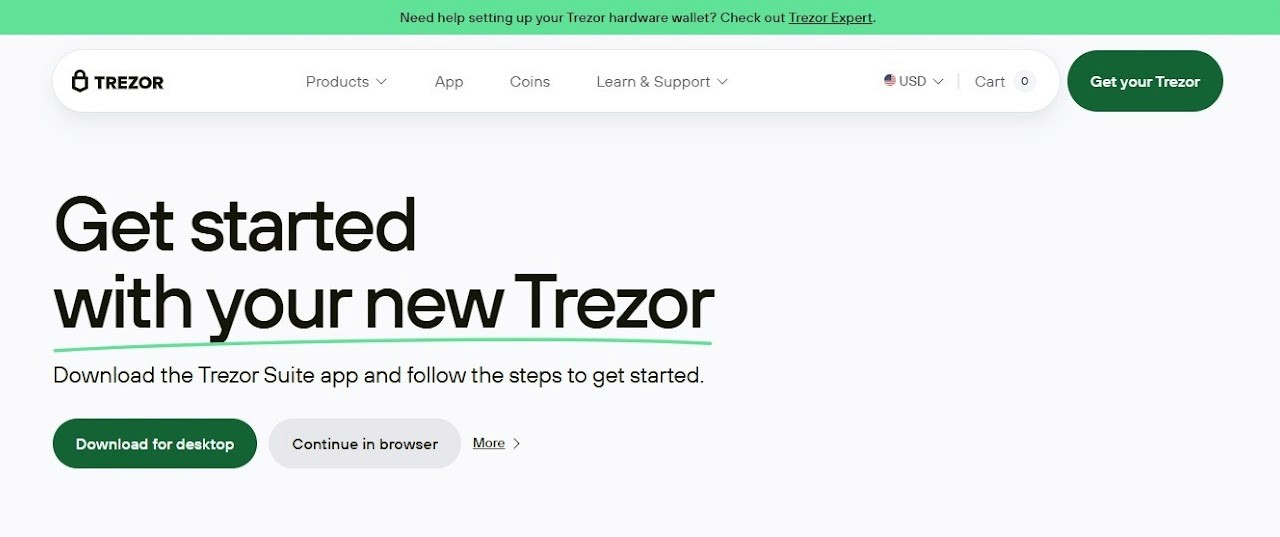
Trezor Login: Understanding How Secure Hardware Wallet Access Really Works
When people hear “Trezor login,” they often imagine a typical username-and-password screen like those used for exchange accounts. But Trezor works very differently — and that’s exactly what makes it one of the most secure ways to store cryptocurrency. Unlike online wallets, Trezor uses a hardware-based authentication process that protects your private keys even if your computer is compromised.
No Traditional Login Needed
With Trezor, there’s no centralized account to sign into. Instead, your identity and access are tied to the physical hardware device itself. When you connect your Trezor to your computer or phone and open Trezor Suite, the app recognizes the device as your login key.
PIN Verification: Your First Layer of Protection
Your PIN acts as the secure entrance to your hardware wallet. It’s required every time you connect your Trezor. Even if someone steals your device, they cannot access your crypto without the PIN — and the device automatically increases delay times after wrong attempts.
Passphrase for Advanced Users
Trezor offers an optional passphrase, which works like a “25th word” added to your recovery seed. This creates an additional, hidden wallet. Anyone trying to log into your device without this passphrase won’t even see that the wallet exists.
Why This Login System Is Safer
Because there’s no online account, there’s nothing for hackers to break into. Your private keys never leave the device, and every transaction requires physical confirmation on the Trezor screen.
Final Thoughts
When people talk about “Trezor login,” they’re really referring to a device-based security flow, not an online account. This approach provides industry-leading protection for your digital assets.